A student guide to using AI without outsourcing your learning
Daniel UmanaMontgomery College
This is not a lecture about cheating.
You already know that submitting AI work as your own is cheating. That is the easy case. This session is about the harder one: the times AI is allowed, you use it, and you still end up learning less than you would have without it. That happens quietly, and it is worth being able to see it coming.
The premise
You provide the thinking. AI provides material for you to evaluate.
It can quiz you, argue with you, and show you what you missed. It cannot understand the material for you, and the understanding is the part you are actually here for.
By the end you can
01
Explain what generative AI is actually doing when it answers you.
02
Find out what your instructor allows, for each class, and follow it.
03
Check AI output for invented facts, invented sources, and agreement it did not earn.
04
Use AI to think harder about your work instead of to skip the thinking.
None of these is about finishing faster. Every one of them is about you staying in charge of what you learn.
Your syllabus is the rule.
Not this site. Not what another professor allows. Not what your friend got away with. AI rules are set per class and sometimes per assignment, and it is on you to know which one you are under.
If the syllabus does not say, ask before you use it. Asking is never the thing that gets you in trouble.
These do not change from course to course, and none of them costs you time.
01
Look for the green shield
Montgomery College gives you Microsoft Copilot free with your MC login. Sign in with your MC account and look for the green shield, which means your conversation is in the school-protected version.
Protected version
02
Keep your drafts
Your version history, your notes, and your ability to explain your own reasoning are what show the work is yours. Keep them. They protect you better than any promise you did not use AI.
Your evidence
03
Do not paste private information
Not your classmates' work, not anyone's ID or health or financial details, not something shared with you in confidence. Once you paste it, you no longer control where it goes.
Never paste
61%61%
of essays by non-native English writers were flagged as AI written across seven detectors. Those essays were human.
Two things follow. Your instructor should not be treating a detector score as proof. And your best protection is not a score at all: it is your drafts, your notes, and being able to walk someone through how you got there.
Source: Liang et al., 2023, Patterns
Your ENGL professor allows AI for brainstorming. Your BIOL professor's syllabus says nothing about AI at all. What can you do in BIOL?
Pick an answer to see the feedback. Nothing is scored.
Autocorrect on steroids.
Prediction, not thinking.
This is a simplified picture on purpose. The point is the behavior, not the architecture.
01
It predicts what words are likely to come next. It is not looking anything up, and it is not reasoning about your class.
02
It learned those patterns from enormous amounts of text, so whatever was overrepresented in that text comes along with it.
03
It produces language that sounds right. Sounding right and being right are two different products.
It sounds exactly as confident when it is wrong.
What it feels like
Fast, fluent, patient, and never annoyed at you.
It answers instantly, it never makes you feel stupid for asking, and it always has more. For a student who is behind or embarrassed to ask, that is genuinely appealing. That is also exactly why it is easy to over-trust.
What is actually true
A wrong answer arrives in the same tone as a right one.
There is no wobble in its voice when it invents something. It does not know your course, your professor's framing, or what was said in class. When your context is missing, it fills the gap confidently.
The invented source problem
Because it predicts plausible text, it can produce a citation that looks perfect: real-sounding author, real-sounding journal, plausible year, and no such article. Students have turned in bibliographies full of sources that do not exist.
If you did not open it, you did not read it, and you cannot cite it.
Three steps, about a minute
01Search the exact title in the library database or Google Scholar.
02If nothing comes up, it probably does not exist. Do not try to make the citation work.
03If it does exist, open it and confirm it actually says what the AI claimed it says.
Whose knowledge did it learn from?
AI learned from text that was written down, published, digitized, and kept. That is not the same as all human knowledge. Some communities, languages, and ways of knowing are heavily represented in that record. Others are barely there at all.
Four questions worth carrying into any answer it gives you
01Whose knowledge was likely written down and preserved?
02Whose knowledge might be missing from that record?
03If I asked about my own community, would it actually know?
04What is it treating as normal, and normal for whom?
Same draft. Same tool. Opposite answers.
Ask it to praise you and it will. That is not feedback, and it is the single easiest way to waste the tool.
Switching between the two framings. Hover or tab in to hold it still.
What you typed
Here is my essay. Explain why my argument is strong and well supported.
What it gives back
Your thesis is clear and you state it early, which gives the reader a strong roadmap.
Your evidence is well chosen and each paragraph supports your central claim.
Overall this is a persuasive and well-organized argument.
It found what you told it to find. You learned nothing, and you feel better about a draft that did not change.
It is trained to be agreeable. If you want it to be useful, you have to ask it to disagree with you.
Copilot gives you a great quote with an author, journal, and year. You search the title and find nothing. What is going on?
Pick any answer to see what happens. Nothing is scored and nothing is saved anywhere but your own browser.
Everybody type this
You are about to become the expert in the room, and it will take ten seconds.
1
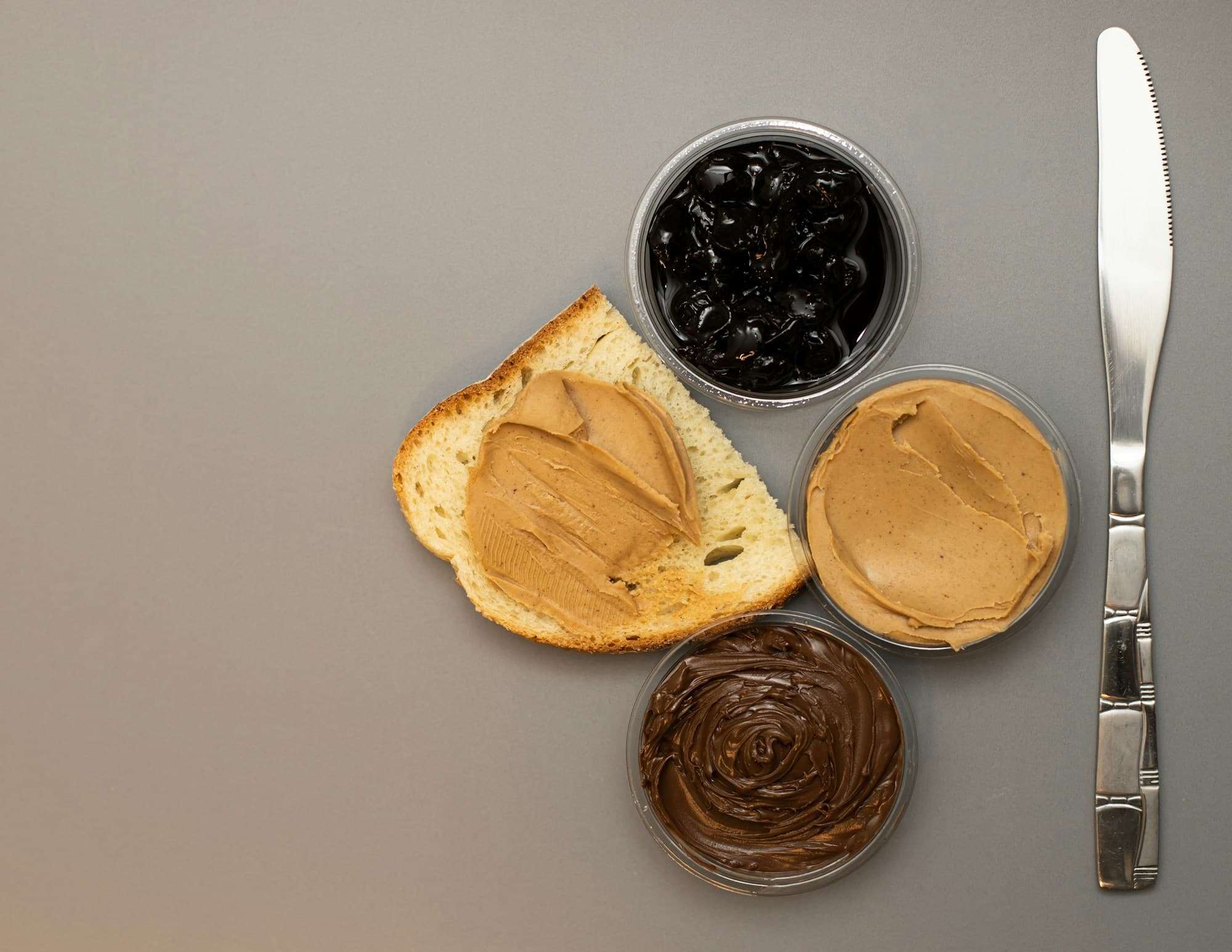
Write instructions for making a peanut butter and jelly sandwich for a five-year-old.
2
Paste it, read what comes back, then answer the one question below before you look at anyone else's answer.
3
What did it miss?
Nobody can be wrong here, which is exactly why it works. Write what you actually noticed.
Answer above, or read it now.
Now make it better
You just found what it did not know. Putting that back in is the entire skill, and it is the same move you will use on every assignment this semester.
Why this is the part that matters
Every gap you found was something you knew and it did not. That is not a flaw you worked around, it is the whole reason you are still needed in the loop. The tool supplies fluent language. You supply the situation: who this is for, what has already gone wrong before, what the answer has to look like, and where the line is. Do that with a sandwich and it is funny. Do it with an assignment, an email to a professor, or a draft you actually care about, and it is the difference between something generic and something that is yours.
Doing the assignment, or skipping it.
The tool is the same. What changes is whether you did any thinking.
Same tool, two different jobs
Change what you ask for and watch what comes back change with it.
Handing over the work
What you type
Write me a 500 word essay on whether social media harms teenagers.
What comes back
Social media has become an inescapable part of adolescent life, raising urgent questions about its effects.
On one hand, studies suggest correlations with anxiety and disrupted sleep patterns.
On the other hand, social media provides connection and community for isolated young people.
Verdict, the catch: Fluent, generic, and yours in no meaningful way. You cannot defend a sentence of it, because you did not think a sentence of it.
The finding worth knowing
Researchers gave high school students an AI tutor for math practice. The students using unrestricted AI did much better during practice, up to 127% better. Then the AI was taken away for the exam, and that same group scored 17% lower than students who had never used it.
Practice felt great and the learning did not happen. The version with guardrails, which prompted students rather than answering for them, did not produce that drop. Feeling productive is not the same as getting better.
Worth keeping in proportion: this was high school math, in one study. It is a warning about how practice can feel, not a law about every class you take.
Percent difference0 = Students who never used AI
During practice, with unrestricted AI
up to 127%127% better
than the students who did not have it.
Then the AI was taken away for the exam
17%17% lower
than the students who had never used it at all.
-250+50+100
Bastani et al., 2025, PNAS
The loop that keeps you in charge
You are at the start and at the end of it. Take yourself out of either one and it stops working.
You1345
AI2
1, step 1 of 5You
You bring something
Your draft, your notes, your attempt, your actual question.
2, step 2 of 5AI
AI responds
It generates questions, critiques, examples, or a practice quiz.
3, step 3 of 5You
You check it
Against your source, your assignment sheet, and what was said in class.
4, step 4 of 5You
You sort it
Keep, question, revise, or reject each piece of what it said.
5, step 5 of 5You
You decide
You make the call, and you can explain why you made it.
You open the loop at step 1 and you close it at step 5.
1, step 1 of 5You
You bring something
Your draft, your notes, your attempt, your actual question.
2, step 2 of 5AI
AI responds
It generates questions, critiques, examples, or a practice quiz.
3, step 3 of 5You
You check it
Against your source, your assignment sheet, and what was said in class.
4, step 4 of 5You
You sort it
Keep, question, revise, or reject each piece of what it said.
5, step 5 of 5You
You decide
You make the call, and you can explain why you made it.
Step 5 hands it straight back to step 1. You open the loop and you close it.
The struggle is not a bug
The moment where you are stuck, rereading, and a little frustrated is the moment the learning is happening. Effortful retrieval is one of the most consistently supported findings in learning science. When AI removes that moment, it removes the part that was working.
Use it to get unstuck, not to avoid ever being stuck.
Dunlosky et al., 2013
You have a draft due tomorrow and you are stuck on your conclusion. Which move keeps the learning yours?
Information is not wisdom.
There is a word for what you have that it does not, and it is older than every tool on this page.
1
It has information. You have wisdom.
A model can hold more information than you will read in a lifetime. Information is knowing what is generally true. Wisdom is knowing what to do here, with these people, right now. Those are different things, and only one of them can be downloaded.
2
It will not announce its bias.
There is no obviously biased sentence to catch. The lean shows up in what it assumes about you and in what it leaves out. It happens through subtle inferences rather than open statements, and people miss it because the answer feels neutral and the tool sounds certain.
Warr, Oster, and Isaac, 2023, cited in Henriksen et al., 2025, p. 76
3
Wisdom is knowing what is good and bad for people, and doing something about it.
That is Aristotle's definition, and it is about 2,400 years old. Notice that it has two halves. Knowing is the first half. Acting on it is the second, and no tool can do the second half for you.
Aristotle, via Henriksen et al., 2025, p. 78
Data is only available about the past. A machine only knows what has already happened. You are standing in what is happening now, with people it has never met.
The first line adapts Clay Christensen, quoted in Henriksen et al., 2025, p. 77
Your set of strategies
Pick at least five.
Not the five that sound best. The five you would actually reach for. They go in the guide you take with you.
0 of 5 picked. 5 to go.
12345
Nothing picked yet. Star any card below to start your set.
Twelve prompts. None of them do the work for you.
Every one of them leaves the thinking with you, which is the only reason they are worth using. Copy one, paste it, and bring your own material with it.
Build the prompt before you open the tool
Vague prompts get vague answers. Fill this in and it writes a prompt that has your actual situation in it, which is the part AI cannot guess.
Which class this is for.
What you actually have to produce.
Check it. If you are not sure, ask your professor.
Be specific. Vague question, vague answer.
The skill you do not want to hand over.
0 of 5 filled in
Updates as you type
I am a student in [your class]. The assignment is [what you have to produce]. For this class, [what your syllabus allows]. Where I am stuck: [be specific]. The skill I want to get better at is [what you will not hand over]. Ask me questions about my work before you give me any feedback. Do not rewrite anything for me.
Anything you leave blank stays in brackets, so you can still see the shape of the prompt. Your answers stay in this browser.
Grouped by the problem you actually have. Search it, save the ones you want, and open a card when you want the reasoning behind the prompt.
Showing 12 of 12 prompts across 4 groups.
01
When you do not get it
For the reading you have read three times and still cannot hold.
01Explain it three ways
The three levels give you a foothold, and the explain-it-back step is the part that makes it stick.
02Find the hole in my understanding
You cannot see your own gap by looking harder at what you already believe.
03Interview the expert
The transferable skill is knowing which answers deserve your trust.
02
Checking what it told you
The habit that separates using AI from believing AI.
04AI output autopsy
Finding the wrong answer takes more expertise than writing a right one.
05The citation check
Asking a tool to flag its own uncertainty is not proof, but it surfaces the shakiest claims so you know where to look first.
06Make it argue against itself
Its first answer follows whatever framing you gave it.
03
Working on your own draft
Feedback on writing you already did. Never a replacement for doing it.
07Find my weakest paragraph
Asking for one problem gets you a real one.
08The skeptical reader
You cannot see your own assumptions, because to you they read as obvious.
09Draft, interrogate, revise
Draft first, then critique, then revise yourself.
04
Studying for real
Retrieval practice, which is the studying that actually works.
10Quiz me, and do not tell me
Pulling an answer out of your own memory is what builds it.
11Turn my notes into questions
It converts material you already gathered into retrieval practice.
12Explain why I got it wrong
The valuable information is in the specific way you were wrong, not the correct answer.
Prompts that are not on this list, on purpose
You will find these everywhere else. They are missing here because each one hands over the exact thing you are in the class to learn.
Not this
Summarize this reading for me.
The reading is the assignment. A summary of a thing you did not read teaches you nothing and you will not be able to discuss it.
Not this
Write my essay on this topic.
Beyond being cheating in most classes, you end up unable to defend a single sentence of it.
Not this
Rewrite this paragraph to sound better.
You lose the one chance to learn what made it weak. Ask what is weak instead, then fix it yourself.
Not this
Just give me the answer to number 7.
The answer is worth almost nothing. The method is the whole point, and it is what the exam will ask for.
A discussion board post
Fictional, and weaker than it looks. Run a strategy on it before you run one on your own work.
It is the task students hand to AI more than any other, and it is the one where handing it over is easiest to spot.
The post
Fictional example
Course
Fictional course, first year
Task
Respond to the assigned reading in 200 to 250 words, then respond to one classmate.
In this week's reading, the author talks about how social media affects the way people communicate with each other. The author makes a lot of good points about how technology has changed things over the past twenty years. Overall I thought this was a very interesting reading and it made me think about a lot of things.
I agree with what Maria said in her post. She made a really good point about how people do not talk face to face as much anymore. I think this is definitely true and it is something we should all think about. Social media has both positive and negative effects on society, and it is important to consider both sides of the issue.
One thing that stood out to me was when the author discussed the impact on younger generations. This is very relevant today. It makes you wonder what the future will look like if things keep going in this direction. What do you all think about this?
Copies all three paragraphs, ready to paste into Copilot.
Your step
Copy it, run one of your picked strategies on it, and read what comes back. Then decide which parts of that feedback you agree with. That last step is the whole exercise.
Read this before you paste
Do not ask it to rewrite this post. Ask it what is weak and why. If you let it rewrite, you learn nothing and you have just watched a machine do a student's homework.
Three ways it goes wrong, shown in full
Three things that go wrong, shown in full. These are reconstructions written to demonstrate each failure clearly, not screenshots of one particular session. The behavior is real and you will see all three within a week of using these tools.
Read this first. Illustrative transcripts. Your wording and the model's replies will differ. What stays the same is the pattern.
Six situations, six decisions
Six situations you will recognize. None of them has a trick answer, and two of them are genuinely allowed. The point is being able to say why.
Pick the option you would actually choose. You will see what it costs or buys you, and you can try the others afterward. Nothing is scored and nothing is sent anywhere.
0/ 6
0 of 6 answered
What we just did
Strip away the specifics and the same three habits are doing all the work.
01
Check it against the source, not against itself
Asking the AI whether it is sure is not verification. Open the reading. Search the citation. Go out and come back.
02
Your context is what it does not have
This class, this professor, this assignment sheet, what was actually said on Tuesday. You supply that or nobody does.
03
If you cannot explain it, it is not yours
The real test is not whether a detector flags it. It is whether you could walk someone through why your work says what it says.
AI gives you feedback saying your third paragraph contradicts your thesis. You reread it and you disagree. What now?
Two questions to answer for yourself
Your answers stay in this browser. Nothing is sent anywhere, nothing is graded, and nobody else sees them.
You lead. AI follows.
You are paying for the understanding, not the finished page. Keep the part that makes you better at something.
What did you keep, and what did you throw out?
The deciding is the part that was yours. Write it down while it is fresh.
These come with you in the guide you download below.
One button, and it is yours.
Your prompt, the ones you starred, and what you wrote above, in one page you can keep.
Every claim on this page comes from somewhere, and every source has limits. That last column is the part most citations leave out. If we are going to ask you to check what AI tells you, it would be strange not to show our own work.
Sources
1010
With limits listed
1010
Evidence base
Showing 10 of 10 sources
Source
What it does not say
Used by
Bastani, H., Bastani, O., Sungu, A., Ge, H., Kabakci, O., & Mariman, R. (2025).Generative AI without guardrails can harm learning. PNAS, 122(26).
Practice gains of 48% and 127%, then exam scores 17% lower for the unguarded group. High school math, nearly 1,000 students. Not a study of college writing.
Card 09
Liang, W., Yuksekgonul, M., Mao, Y., Wu, E., & Zou, J. (2023).GPT detectors are biased against non-native English writers. Patterns, 4(7).
61% average false positive rate across seven detectors on 91 TOEFL essays. The detectors tested were 2023 era, and the sample is one essay type.
Page wide
Dunlosky, J., Rawson, K. A., Marsh, E. J., Nathan, M. J., & Willingham, D. T. (2013).Improving students' learning with effective learning techniques. Psychological Science in the Public Interest, 14(1).
Practice testing and distributed practice rated high utility. Rereading and highlighting rated low. Low utility means thin or inconsistent evidence, not proven useless.
Card 01Card 02Card 10Card 11
Metcalfe, J. (2017).Learning from errors. Annual Review of Psychology, 68, 465-489.
Errors help when corrective feedback follows and supplies the right answer. Making mistakes alone does not teach anything.
Card 04Card 12
Wineburg, S., & McGrew, S. (2019).Lateral reading and the nature of expertise. Teachers College Record, 121(11).
Fact checkers left the page to evaluate it; historians and undergraduates read down the page and did worse. Small samples: 10, 10, and 25, using think-aloud protocols.
Card 04Card 05
Sharma, M., et al. (2024).Towards understanding sycophancy in language models. ICLR 2024.
Sycophancy is a property of preference-based training, tested on 2023 era models. Not a fixed rate you can expect from any current tool.
Card 03Card 06
Hattie, J., & Timperley, H. (2007).The power of feedback. Review of Educational Research, 77(1).
Cite it for the framework, not the size. The original 0.79 figure has been revised; Wisniewski, Zierer & Hattie (2020) report 0.48.
Card 09
Sweller, J., van Merrienboer, J. J. G., & Paas, F. (2019).Cognitive architecture and instructional design: 20 years later. Educational Psychology Review, 31(2).
Worked examples help novices. The advantage shrinks, disappears, then reverses as you gain expertise, so the support that helps in week two can hold you back in week twelve.
Card 01
Messick, S. (1995).Validity of psychological assessment. American Psychologist, 50(9).
Source of construct irrelevant variance: earning credit for something other than what the assignment meant to measure. A measurement theory paper, not a study about AI.
Page wide
CAST. (2024).Universal Design for Learning Guidelines version 3.0.
A design framework for multiple ways of representing and engaging with content. Guidance, not an effectiveness study.
Card 01
Bastani, H., Bastani, O., Sungu, A., Ge, H., Kabakci, O., & Mariman, R. (2025).
Generative AI without guardrails can harm learning. PNAS, 122(26).
What it does not say
Practice gains of 48% and 127%, then exam scores 17% lower for the unguarded group. High school math, nearly 1,000 students. Not a study of college writing.
Used byCard 09
Liang, W., Yuksekgonul, M., Mao, Y., Wu, E., & Zou, J. (2023).
GPT detectors are biased against non-native English writers. Patterns, 4(7).
What it does not say
61% average false positive rate across seven detectors on 91 TOEFL essays. The detectors tested were 2023 era, and the sample is one essay type.
Used byPage wide
Dunlosky, J., Rawson, K. A., Marsh, E. J., Nathan, M. J., & Willingham, D. T. (2013).
Improving students' learning with effective learning techniques. Psychological Science in the Public Interest, 14(1).
What it does not say
Practice testing and distributed practice rated high utility. Rereading and highlighting rated low. Low utility means thin or inconsistent evidence, not proven useless.
Used byCard 01Card 02Card 10Card 11
Metcalfe, J. (2017).
Learning from errors. Annual Review of Psychology, 68, 465-489.
What it does not say
Errors help when corrective feedback follows and supplies the right answer. Making mistakes alone does not teach anything.
Used byCard 04Card 12
Wineburg, S., & McGrew, S. (2019).
Lateral reading and the nature of expertise. Teachers College Record, 121(11).
What it does not say
Fact checkers left the page to evaluate it; historians and undergraduates read down the page and did worse. Small samples: 10, 10, and 25, using think-aloud protocols.
Used byCard 04Card 05
Sharma, M., et al. (2024).
Towards understanding sycophancy in language models. ICLR 2024.
What it does not say
Sycophancy is a property of preference-based training, tested on 2023 era models. Not a fixed rate you can expect from any current tool.
Used byCard 03Card 06
Hattie, J., & Timperley, H. (2007).
The power of feedback. Review of Educational Research, 77(1).
What it does not say
Cite it for the framework, not the size. The original 0.79 figure has been revised; Wisniewski, Zierer & Hattie (2020) report 0.48.
Used byCard 09
Sweller, J., van Merrienboer, J. J. G., & Paas, F. (2019).
Cognitive architecture and instructional design: 20 years later. Educational Psychology Review, 31(2).
What it does not say
Worked examples help novices. The advantage shrinks, disappears, then reverses as you gain expertise, so the support that helps in week two can hold you back in week twelve.
Used byCard 01
Messick, S. (1995).
Validity of psychological assessment. American Psychologist, 50(9).
What it does not say
Source of construct irrelevant variance: earning credit for something other than what the assignment meant to measure. A measurement theory paper, not a study about AI.
Used byPage wide
CAST. (2024).
Universal Design for Learning Guidelines version 3.0.
What it does not say
A design framework for multiple ways of representing and engaging with content. Guidance, not an effectiveness study.
Used byCard 01
A card number means a prompt in the toolkit leans on that source. No number means the source shapes the page without sitting behind a single prompt.
Glossary
Eight terms from this page, in plain language, so you can use them in class without guessing.
Prompt
What you type. The more of your real situation it contains, the more useful the answer.
Grounding
Giving the tool your own material to work from, like your draft or the assignment sheet, so it responds to your thing instead of a generic one.
Hallucination
Output that is fluent and confident but made up, including citations and quotes for sources that do not exist.
Sycophancy
The tendency to agree with whatever you implied you wanted to hear.
RLHF
Reinforcement learning from human feedback. People rated answers, and those ratings trained the model toward what people like.
Lateral reading
Checking a claim by leaving it and looking at other sources, instead of staring harder at the original.
Cognitive offloading
Handing a mental task to a tool. Useful for a phone number. Costly for the thing you are being graded on learning.
Desirable difficulty
Effort that feels bad and works anyway. Struggling to recall something makes you remember it better.
Want the practical how-to?
This page is about judgment: what AI is doing and how to evaluate it. If you want the day-to-day study prompts, a tools list, and the prompt scaffold, that lives on the companion site.